Showing posts with label strategy. Show all posts

Friday, November 16, 2007

OUNL Learning and Working environment (Final)

Don't misunderstand the title of this post: the final word has not yet been said about the OUNL PLWE (personal learning and working environment). There will be many more meetings like this - maybe not always ending with a beer ;-)
The meeting ended on a very positive note, with all participants congratulating Kathleen and Rob - the initiators of the Dagstuhl conference - on the positive and open atmosphere that they succeeded in creating. The atmosphere was indeed very good and productive. In the morning plenary session both subgroups presented the work that they had done during the Wednesday and Thursday sessions. It was quite amazing to see how much can be achieved in a week!
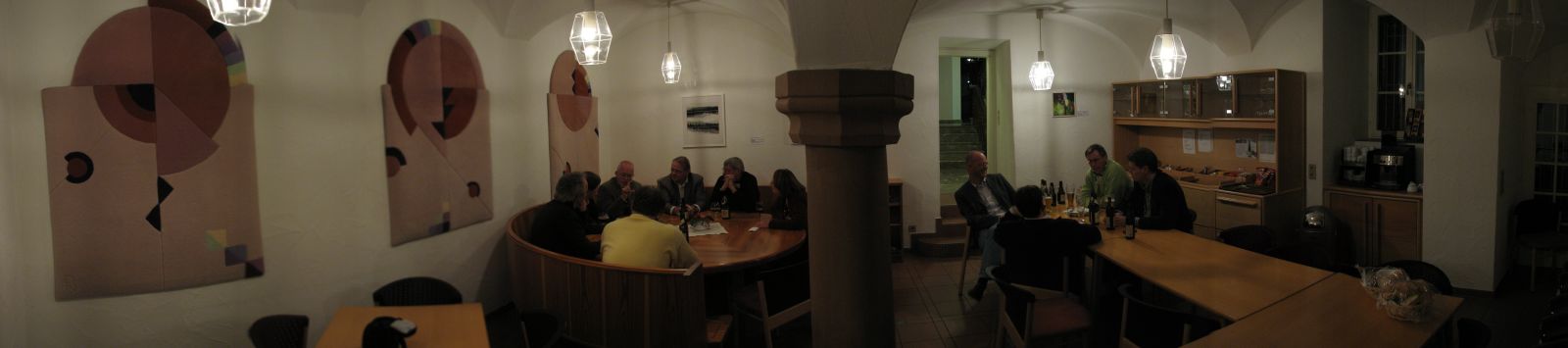
After the coffee break we split up in two groups again, and our group went to a room with a very nice stove (see pic) to develop a first implementation plan for the service that we had chosen to develop as a first.
Then after our final lunch - the food at Dagstuhl is of quite good quality, by the way - we had a final plenary to decide on the internal communication strategy to follow in relation to the outcomes of the Dagstuhl conference, and to evaluate the conference progress and outcomes. Everyone was very pleased (as I mentioned before), and there are plans for a quick follow-up at the start of January, in order to keep the momentum. I found out that this kind of top management meetings is very rare at the OUNL - the previous one was estimated to have taken place some decades ago ;-). It was suggested that this kind of plenary management meeting about strategic directions might need to be repeated every second year or so.


As to the near future: next week Tuesday the University Board will be hearing Rob's report on the outcomes and will be asked to decide on the principles of the new direction, and to take actions to warrant the continuation of the work that we started in the past week.

Henry and I will be working together with Kathleen and Rob to finalise the report of the conference and to discuss the next steps for our elo2b project.

OUNL learning and working environment (Part 2)


The 5-day strategy seminar on the OUNL learning and working environment for the future is nearing its completion.
  • On Tuesday, we finished the presentations with Bert's contribution on the role of the Ruud de Moor Centre for teacher professionalisation, Huub & Ron's duo-presentation on the service and ICT support centres. Rob concluded with the presentation of the Master in Active Learning, and a heated discussion of the role of OTEC in the future learning and working environment.
  • We then started with the discussion of how we want to further develop and position the OUNL lifelong learning activities (other than the courses and programmes we offer) in our search for a lifelong relationship between learners and the OUNL, with an attractive offering of services and contents.
  • Starting Tuesday lunchtime, we split up in two groups in order to make our visions of the future of our regular (Bachelor/master - BaMa) and our lifelong learning (LLL) offerings more explicit, through scenario's, high level use cases and a domain model. While Kathleen chaired the BaMa group with support from Henry, Rob chaired the lifelong learning group with support from Hubert and myself.
  • We used Google Docs to collaboratively work on documents and used Gliffy for the diagrams. All the sources, working documents and multimedia materials were made accessible through a private Wetpaint Wiki that Rob had set up. Nice tool that, really impressive. The dialogue between the two groups in the last two days was limited to informal moments during lunch or dinner, or after working hours. But we were able to read the working documents that the others were building.
  • Today, while the managers in the LLL sub-group developed a rough business case for the service we chose to develop first, Hubert and I worked on formalising some of the free-text scenarios. We soon discovered that even at such a high level of abstraction, our ideas for LLL services are extremely complex, involving many different concepts and actors. However, the exercise has helped to make the design process more concrete for all participants, and has allowed us to identify some critical issues that still need to be resolved.
  • Whereas the BaMa group had succeeded in taking some distance from the current situation during the development of the scenario's, this turned out to become more difficult as soon as the task became more concrete. For us in the LLL group things were a bit different, as we could start from scratch as it were, and in developing our scenario's the limitations of the current situation were less of an obstacle.
  • For me as a newcomer in the OUNL it was striking to see how organisational obstacles and defensive mechanisms come into play when discussing the practical plans and task divisions of such a large project. There seem to be a lot of unresolved issues between the different entities in the organisation, and I am not sure that good process can be made as long as there are such forceful hidden agenda's. But then I am only a by-stander in this process.
  • Also for the LLL group the management and organisational issues have not been sufficiently dealt with yet, at least not from my perspective. There are issues of overlap with other projects and initiatives, there are issues of development and programming capacity, and so on.
  • I hope that we can end the meeting on a positive note tomorrow noon, and that we can agree on follow-up activities for the next month, that can lead to implementation and management plans that are acceptible to all parties. In my view, a co-ordinated approach is needed to tackle the issues that lie ahead. The ideal situation would be one were all those that are actively involved would work closely together - also literally in close vicinity to each other - to get the critical mass and cross-fertilisation that is needed to pull this major undertaking of.
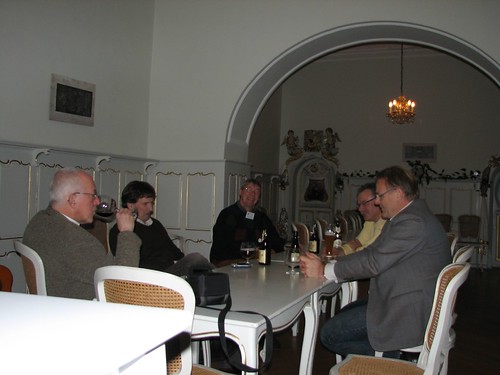
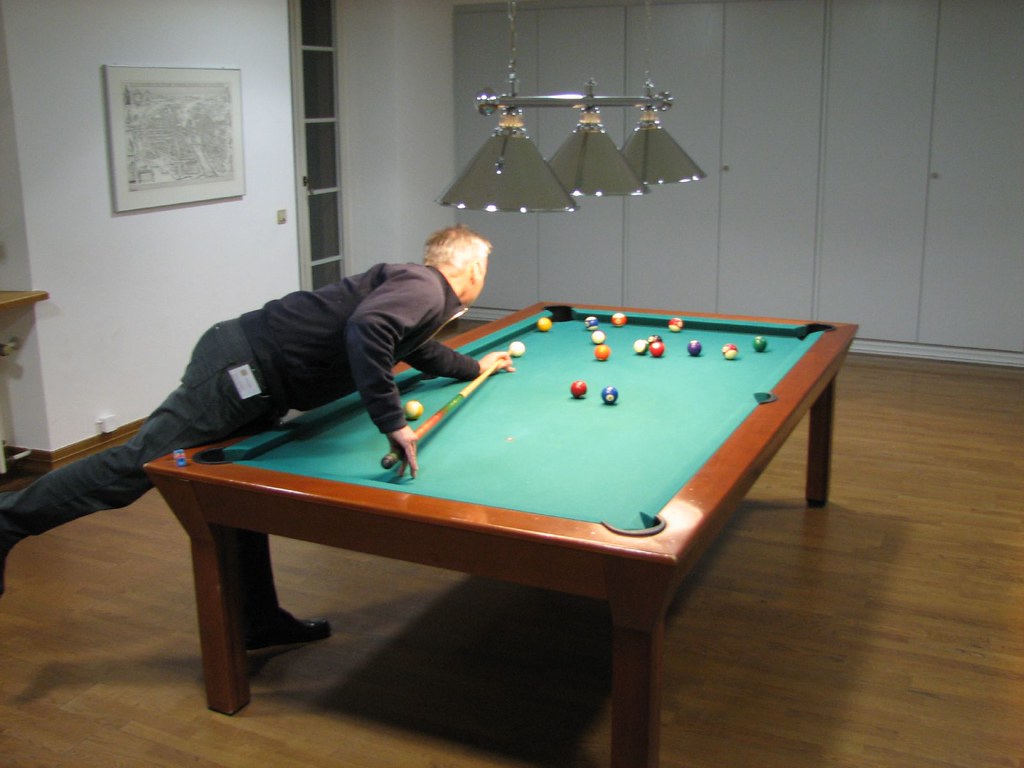
  • Anyway, we continued working in separate groups, right up until 9:30 this evening - thereby skipping our social event. Yesterday and today the evening only started around 10:00. Henry, Hubert and I would play some billard, and then join the others in the Weinstube for some bread and cheese and a German Weissbeer.

Monday, November 12, 2007

OUNL learning and working environment (Part 1)

Senior management of the Open University of the Netherlands are currently on a 1-week strategy session in Schloss Dagstuhl in Germany, where they are discussing and drafting the model for the future ICT-support for OUNL education. The "VLE of the future" project leaders - Henry and myself - are there too in order to present the project findings sofar, to participate in the discussions as domain experts, and to model the outcomes of the discussions into Use Cases and a Domain Model - thus taking a head start in the design of the new system(s).

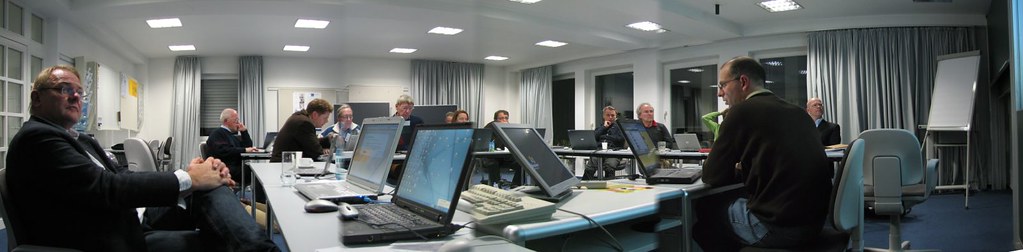
The schedule of the week - chaired by Rob Koper - is rather full, with plenary and parallel discussion and working sessions in the mornings and afternoons, while Henry and I use the evening sessions to allow our colleagues to explore Web2.0 applications that can be used within education (cf. picture above). This evening we had a hands-on session about mash-up (iGoogle), RSS and del.icio.us, which our colleagues seemed to appreciate, as they prepare to become more "net savvy".

The day sessions w mainly focused on reporting on the current state-of-the-art within the institution.
  • The University Board members provided us with a clear outline of the relevant decisions and directions, and of the goals of the strategy week.
  • During the morning session, Jeroen presented the current state of the enterprise architecture initiative and the main figures about student populations, followed by Kathleen's summary of the discussions about the OUNL's educational model, and her report on the current state of the VLE - with Blackboard as its central element. After Cees' presentation of the current costs of the VLE provision, it was my turn to present the main principles of the future VLE - or PLWE as we prefer to say. However, the lunch bell prevented me from discussing the life-long learning scenario, which will probably become the main topic for discussion during the remainder of the week.

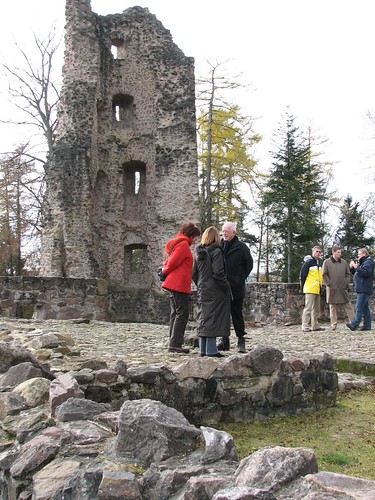
  • After a brisk autumn walk to the ruins of the old castle, Stef presented the current status of the Web2008 project, that intends to develop a new customer-oriented portal for the OU. This presentation gave rise to quite some comments and questions, as it closely interlinks with the PLWE and architecture initiatives.
  • Stef's presentation was followed by the deans of the faculties who presented the current issues of each faculty, their wishes with regard to the PLWE, and to the current processes.
  • We did not succeed in finishing the presentations, so tomorrow morning will continue.
On the whole, the discussions were quite constructive in my view, and similar issues seem to arise in the different parts of the organisation, even though each faculty has its own student population, and operates in a different market with different requirements with regard to education. We were presented with quite a lot of valuable information, which we now need to narrow down and condensate into concrete models and later into a general implementation plan. More to come...

Thursday, November 08, 2007

VLE of the future - current status

I want to briefly report on the status of our project on the OUNL's VLE of the future. When the project started in February, the goal was to write an advice for the University Board about the technology needed to support the OUNL's future educational activities. For me - as a newcomer at OUNL - it was not clear what the future educational strategy of the OUNL was, and interviews with stakeholders showed that I was not the only one in that position. I need to add that clear choices were made by the University Board at the end of 2006, but my perception during a round of interviews was that the implications of those choices were not clear to all those involved. The following double choice was made:
  • On the one hand, the main objective remains to offer Dutch-spoken academic courses and bachelor and master degrees for open and distance learning. Target groups here are those that want to combine education and work, or never had the chance to study before. Underlying this is a supply-based business model, centred around high-quality self-study materials with minimal coaching.
  • Next to that, there is growing activity in more targeted areas, where lifelong learners with fragmented learning needs are the target audience. Basic resources for this activity is the existing supply of course materials and of human expertise that can be used in other settings and for other audiences. Also partnerships with other colleges and shorter programmes are offered in this area. The business model for these activities is not quite clear yet - as is the case for most institutions in this rapidly changing area. The student is very much in the centre of this model, and the OUNL wants to be able to offer services and content that provide added value in a way that clients will want to pay for the services.
In order to try and clarify some of the implications of these choices on ICT tooling, the project developed a number of extreme scenario's of the future. These scenario's were not meant as distinct future directions for the institution, but rather as vehicles for bringing across the message that
different business choices imply different business processes (and staff skills) and that different business processes imply different ICT support tools.
I think we may have formulated the message somewhat too pointedly, but as a result I think the message came through.

Next to the scenario's, we formulated a number of basic principles for the future VLE, which we have now given the working title "Personal Learning and Working Environment" (PLWE). These principles are:
  1. Every student his/her own learning environment: personalisation & flexible delivery are important key words. We need to offer an integrated portal entry as well as feeds, widgets and web clients that feed into mash-up tools such as iGoogle, Netvibes or Pageflakes. Moreover, the student is in control of the functionality and tools that (s)he wants to use.
  2. The PLWE needs to support the complete educational process for teachers, tutors and students, and not just the delivery of course materials and interaction (the so-called exploitation processes). The PLWE needs to offer services and functionality for the design, assembly, and delivery of courses / learning materials, for teaching and tutoring, for community building, and finally for the management and maintenance of educational materials and activities.
  3. The student and his/her learning are central to the PLWE, and these need to be supported by the most appropriate digital tools. However, the PLWE needs to be at the same level of priority within the organisation.
  4. Cohesion through architecture: business choices need to be aligned with business processes, with systems and applications, with information and ICT infrastructure. This cohesion needs to take the form of an integrated design that warrants long-term sustainability.
  5. Open standards allow technical components and services to communicate. Moreover, as the OUNL is a small institution, the importance of partnerships and alliances will increase, thus enhancing the importance of (open) standards.
  6. One single infrastructure for all current and future markets and product-market combinations will increase the potential for functional synergies.
  7. Open Source software enhances the extension and adaptation possibilities of the PLWE. Next to that, the OUNL is a public institution mainly funded with public money, and the public can benefit from the software that is developed for the PLWE.
  8. Finally, the PLWE needs to have an experimental setup, next to its production environment to allow faculties and staff to research, develop and test new tools and methods. An easy transition from experimental to production environment is needed.
Next week, OUNL management will discuss these issues and make some decisions about them. More to follow.