Monday, November 12, 2007

OUNL learning and working environment (Part 1)

Senior management of the Open University of the Netherlands are currently on a 1-week strategy session in Schloss Dagstuhl in Germany, where they are discussing and drafting the model for the future ICT-support for OUNL education. The "VLE of the future" project leaders - Henry and myself - are there too in order to present the project findings sofar, to participate in the discussions as domain experts, and to model the outcomes of the discussions into Use Cases and a Domain Model - thus taking a head start in the design of the new system(s).

The schedule of the week - chaired by Rob Koper - is rather full, with plenary and parallel discussion and working sessions in the mornings and afternoons, while Henry and I use the evening sessions to allow our colleagues to explore Web2.0 applications that can be used within education (cf. picture above). This evening we had a hands-on session about mash-up (iGoogle), RSS and del.icio.us, which our colleagues seemed to appreciate, as they prepare to become more "net savvy".

The day sessions w mainly focused on reporting on the current state-of-the-art within the institution.
  • The University Board members provided us with a clear outline of the relevant decisions and directions, and of the goals of the strategy week.
  • During the morning session, Jeroen presented the current state of the enterprise architecture initiative and the main figures about student populations, followed by Kathleen's summary of the discussions about the OUNL's educational model, and her report on the current state of the VLE - with Blackboard as its central element. After Cees' presentation of the current costs of the VLE provision, it was my turn to present the main principles of the future VLE - or PLWE as we prefer to say. However, the lunch bell prevented me from discussing the life-long learning scenario, which will probably become the main topic for discussion during the remainder of the week.
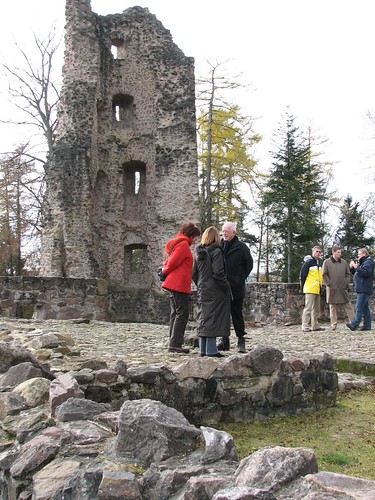
  • After a brisk autumn walk to the ruins of the old castle, Stef presented the current status of the Web2008 project, that intends to develop a new customer-oriented portal for the OU. This presentation gave rise to quite some comments and questions, as it closely interlinks with the PLWE and architecture initiatives.
  • Stef's presentation was followed by the deans of the faculties who presented the current issues of each faculty, their wishes with regard to the PLWE, and to the current processes.
  • We did not succeed in finishing the presentations, so tomorrow morning will continue.
On the whole, the discussions were quite constructive in my view, and similar issues seem to arise in the different parts of the organisation, even though each faculty has its own student population, and operates in a different market with different requirements with regard to education. We were presented with quite a lot of valuable information, which we now need to narrow down and condensate into concrete models and later into a general implementation plan. More to come...

Thursday, November 08, 2007

VLE of the future - current status

I want to briefly report on the status of our project on the OUNL's VLE of the future. When the project started in February, the goal was to write an advice for the University Board about the technology needed to support the OUNL's future educational activities. For me - as a newcomer at OUNL - it was not clear what the future educational strategy of the OUNL was, and interviews with stakeholders showed that I was not the only one in that position. I need to add that clear choices were made by the University Board at the end of 2006, but my perception during a round of interviews was that the implications of those choices were not clear to all those involved. The following double choice was made:
  • On the one hand, the main objective remains to offer Dutch-spoken academic courses and bachelor and master degrees for open and distance learning. Target groups here are those that want to combine education and work, or never had the chance to study before. Underlying this is a supply-based business model, centred around high-quality self-study materials with minimal coaching.
  • Next to that, there is growing activity in more targeted areas, where lifelong learners with fragmented learning needs are the target audience. Basic resources for this activity is the existing supply of course materials and of human expertise that can be used in other settings and for other audiences. Also partnerships with other colleges and shorter programmes are offered in this area. The business model for these activities is not quite clear yet - as is the case for most institutions in this rapidly changing area. The student is very much in the centre of this model, and the OUNL wants to be able to offer services and content that provide added value in a way that clients will want to pay for the services.
In order to try and clarify some of the implications of these choices on ICT tooling, the project developed a number of extreme scenario's of the future. These scenario's were not meant as distinct future directions for the institution, but rather as vehicles for bringing across the message that
different business choices imply different business processes (and staff skills) and that different business processes imply different ICT support tools.
I think we may have formulated the message somewhat too pointedly, but as a result I think the message came through.

Next to the scenario's, we formulated a number of basic principles for the future VLE, which we have now given the working title "Personal Learning and Working Environment" (PLWE). These principles are:
  1. Every student his/her own learning environment: personalisation & flexible delivery are important key words. We need to offer an integrated portal entry as well as feeds, widgets and web clients that feed into mash-up tools such as iGoogle, Netvibes or Pageflakes. Moreover, the student is in control of the functionality and tools that (s)he wants to use.
  2. The PLWE needs to support the complete educational process for teachers, tutors and students, and not just the delivery of course materials and interaction (the so-called exploitation processes). The PLWE needs to offer services and functionality for the design, assembly, and delivery of courses / learning materials, for teaching and tutoring, for community building, and finally for the management and maintenance of educational materials and activities.
  3. The student and his/her learning are central to the PLWE, and these need to be supported by the most appropriate digital tools. However, the PLWE needs to be at the same level of priority within the organisation.
  4. Cohesion through architecture: business choices need to be aligned with business processes, with systems and applications, with information and ICT infrastructure. This cohesion needs to take the form of an integrated design that warrants long-term sustainability.
  5. Open standards allow technical components and services to communicate. Moreover, as the OUNL is a small institution, the importance of partnerships and alliances will increase, thus enhancing the importance of (open) standards.
  6. One single infrastructure for all current and future markets and product-market combinations will increase the potential for functional synergies.
  7. Open Source software enhances the extension and adaptation possibilities of the PLWE. Next to that, the OUNL is a public institution mainly funded with public money, and the public can benefit from the software that is developed for the PLWE.
  8. Finally, the PLWE needs to have an experimental setup, next to its production environment to allow faculties and staff to research, develop and test new tools and methods. An easy transition from experimental to production environment is needed.
Next week, OUNL management will discuss these issues and make some decisions about them. More to follow.

Is the VLE/LMS dead


Martin Weller states: "The VLE/LMS is dead", but I am not sure I agree with him, at least not for formal education settings.

  • Sure, the freely available tools on the Internet are much more fun, and do not feel as 'awkward' as the tools in monolithic VLE's, but as Niall Sclater said:"(formal) Education is not meant to be fun, it's meant to be hard work"
  • I feel that the issue of control is more important than Martin argues, because educational institutions are legally forced to keep local copies of all learning materials and their students' learning outputs for reasons of quality control and accreditation, or in case students want to contest exam results.
  • Thirdly, not all higher ed teachers - or students for that matter - are as technologically savvy as we think them to be. There is something to be said for learning from a book in your backyard, and attending face-to-face tutorials or lectures. Differences in learning style and preferences need to be accounted for...
If I come up with other arguments, I'll post them later.

Visit from the OU (UK)

Yesterday and the day before, Niall Sclater - programme manager of the UK Open University's VLE - visited the Open Universiteit Nederland (OUNL). Next week, the OUNL management will be spending a week at the Dagstuhl castle to discuss implementation issues of the OUNL's future strategy, especially with regard to its educational model and the ICT instrumentation to support that model. Therefore it was good to have Niall over, and hear his take on the OU-UK's choice for Moodle, and the experiences with it so far.

We had some pretty good discussions and a nice dinner and Niall was nice enough to give two presentations to a select group of stakeholders within the OUNL, some of whom will be present at the strategy week. Even though our educational models are somewhat different, we have a lot of issues and problems in common. We have decided to take these issues as a starting point for a further close collaboration. So in the coming weeks, you will find a list of issues emerging on the elo2b weblog at edublogs. Kathleen (our Programme Manager), Henry (my fellow project leader) and myself will contribute to that list, and discuss the issues.
After the strategic week, we can see how we can extend our collaboration.

Saturday, October 27, 2007

About my blogging - NOT

I know, I know. It's been too long since I blogged on Stievie. Been Twittering and Facebooking too much, I guess. However, I have been keeping up-to-date with a number of EdTech blogs via Netvibes, and I have learned a lot in this past half year (through lurking, but still - you'll find my reading sources on del.icio.us).
But I do find it hard to take the time or the energy to write on my blog, or any blog for that matter: the weblog we made for the "VLE of the future" project at the OUNL has not been updated for quite some time, and my contributions on edublogs.be have been minimal too. Wilfred is doing a study on the reasons why educational professionals do not blog, the results of which he will present during the SURF educational days next month. Interested to learn what the most important reasons are. I agree with Martin Weller, when he exclaims "ThOU shalt blog!" (with OU referring to Open University), but I seem to lack the self-organisational skills to get any blogging done, or any other writing for that matter. My innate problems with concentration and focus seem to be hard to solve. Therefore, I want to try and get back to some more blogging, as a first step to getting some preliminary ideas in writing, as a basis for some more elaborate publishing (in the line of GrĂ¡inne Conole's thinking).

Friday, April 20, 2007

Study day in KATHO Tielt


Today I had the pleasure of participating in a study day in the West of Flanders (KATHO Tielt) on new trends in distance education. I finally met some of the writers of my favourite blogs. Wilfred Rubens, Margriet Van Den Bergh, and Smetty. A strong delegation of edubloggers, AVNet staff, but also EliseLeren alumni were present.

The study day was also the formal starting point of a new Expertise Centre for Distance Education. Aims of this expertise centre: radicalising didactics, evaluating practical pilots, development of tools that are needed for distance education, critically reviewing f2f learning/teaching. This expertise centre has been an inspiring and creative innovator within the Hogeschool. Approx. 10% of KATHO students (some 750 students) are now enrolled in some form of distance education.

Four themes were discussed
  • Design & didactics
  • Social software
  • Game-based learning in virtual worlds
  • Virtual internationalisation
Together with Johannes and Maarten I contributed to the session on Social software, with a short talk on the institutional issues involved in introducing social software in traditional higher education institutions.
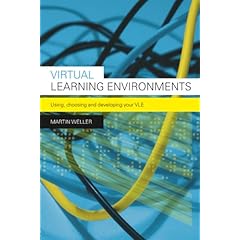
On the way here (and on the way back, I presume) I have been reading in Martin Weller's interesting book on Virtual Learning Environments. Interesting day!

Monday, April 02, 2007

My new job @ Educational technology expertise centre - Open Universiteit Nederland


As of today, I am a full-time assistant professor at OTEC, the Educational technology expertise centre - Open Universiteit Nederland.
I will be spending half of my time in the Development Programme - headed by Prof. Rob Koper - and the other half in the Implementation Programme - headed by dr. Wim Westera. More specifically, I will be working in the TENCompetence project on the one hand, and I'll be leading the OUNL's internal project elo2b, on the other.
elo2b is a preliminary study, in which a roadmap towards the "Virtual Learning Environment of the future" needs to be developed and agreed by all stakeholders. It is an ambitious effort by the OUNL to keep a leading position in the distance education market in the Dutch speaking regions.

Friday, January 26, 2007

eLERU moving to the next stage

I'm at the University of Heidelberg in Germany, attending the final meeting of the eLERU project. The portal with the project results is nice looking, but the Milan partner cannot guarantee the continuation.

This FlashVlog contains some impressions of the meeting.

Wednesday, November 29, 2006

Online Educa Berlin 2006 - Day 1


Online Educa Berlin 2006 started today for me, 10 years after my first participation in the conference. It was a good day with a full-day forum on Virtual Mobility, that we (from the Victorious project) co-organised with the Being Mobile project.
After an interesting keynote by Ray Land (currently at the University of Strathclyde in Glasgow) titled "The Next Generation of e-Learning: Time, Mobility and Identity", I gave a presentation in the Victorious parallel session on some of our experiences with the Vic feasibility studies.
After a delicious lunch, we had interesting round table discussions, the summaries of which are available on Wikipedia, where I created this new lemma on "Virtual mobility".
-- To be continued --

Wednesday, November 15, 2006

Stephen's Web moving to Drupal

Interesting news from Stephen Downes: In the interview that Tom Wambeke and I had with Stephen in Barcelona, he already mentioned that some internal changes were impending at NRC. Now Stephen writes that his website will be moving to Drupal - a platform that we have been experimenting with extensively at AVNet - K.U.Leuven. It will be interesting to follow the transition of his extensive website on to Drupal. More about this at: Stephen's Web and HalfAnHour.

Tuesday, November 14, 2006

Web 2.0 Seminar at AVNet


Today, I'll attempt live blogging from an internal information seminar on Web 2.0 in Higher Education, organised by AVNet. The replay of the -Dutch language - seminar can be found here.
  • The first speaker is Tom Wambeke, lecturer at OHO, Open Higher Education of the Polytechnic KATHO. Tom starts by showing the Web 2.0 tools that he has used in the previous week, then attempts a definition, and classification.
    • Examples:
      • First: http://www.netvibes.com/starts the day
      • Second: http://www.linkedin.com/
      • Third: my del.icio.us tags (as a tag cloud)
      • Fourth: last.fm - Musical profile
      • Fifthly: http://www.43things.com/
      • Finally: http://www.furl.net/ Tagged URL's
    • Tom's slides are available at http://www.slideshare.net/
      • Web 1.0: 45 million global users of 250000 sites - passive consumption of published content
      • Web 2.0: Published content & user-generated content - 1 billion users of 80.000.000 sites
    • Varied arsenal of tools
      • Weblogs (www.edublogs.be), wiki's (George Siemens' wiki of his keynote speech at Online Educa Berlin 2006), fora, social bookmarking (Furl, del.icio.us), podcast/vodcast (Stanford, K.U.Leuven), virtual worlds (Second Life), instant messaging (MSN, Skype), social network services (LinkedIn, Flickr, YouTube)
    • Definition
      • The Wikipedia definition is not adequate in Tom's view. Tom lists a number of basic characteristics, and feels that no adequate definition is available.
      • It's not about new media, but more about an attitude towards those media: Interaction, Networking, Feedback and Communication.
      • The technology becomes more and more transparent: KISS (Keep it Simple and Stupid).
  • Unfortunately, my battery power is running out, so my life blogging needs to end here... The rest will be 'after-the-fact'.
  • Brief summary of Maarten Cannaerts' talk:
    • Maarten described 4 examples of how Web 2.0 applications were used in real-life cases: - slides available online
      • Information competencies in the 21st century
      • The ELISE Online course on didactic aspects of e-Learning
      • Virtual internationalisation in the GO! project
      • Teaching & research communities through group blogging: www.edublogs.be
  • Finally, Bieke Schreurs tried to summarise some of the good practices & lessons learned and related them to the Virtual Learning Environment within the Associatie K.U.Leuven.
It was a difficult exercise in trying to balance 'much information' with 'focussed and relevant information'. The participant evaluations will need to show how successful we were.

Saturday, October 28, 2006

EDEN Research Workshop - Impressions

Highlights in the EDEN Research Workshop sofar are the
  • session on Audiovisual Issues, and especially the presentation by Jack Koumi, a specialist on media characteristics,
  • the keynote by Rob Koper, who starts from an interesting definition of competences,
  • the interview that Tom Wambeke and I did of Stephen Downes, who will be doing a keynote later,
  • and the election of the paper of Alberto Cattaneo & Elena Boldrini as Best Paper during the conference dinner.
Sofar a very positive experience.

Thursday, October 26, 2006

EDEN Research Workshop - Barcelona

Currently at a - potentially very interesting - research workshop in Barcelona (Spain) - more info on the EDEN Website.
A number of interesting keynote speakers, but also the format of the other sessions promises to be very exciting, with much debate and discussion and little presentation.
I'll try to do some live blogging on the way.
(Already said hi to Stephen Downes)

Friday, September 29, 2006

International speaker seminar series: Venus Seminars


On October 11th, the first of a series of video-conferenced and webcast seminars with renown international speakers - the so-called Venus-Seminars - welcomes the well-known scientist Ricardo Petrella. The intended audience for these seminars consists of students in higher-education, but also the general audience is targeted. This year's theme is "Global issues for the European citizen", and lists an impressive group of speakers, including Joanne Ciulla, Wolfgang Wessels, Jean-Jacques Cassiman, Stephen Downes and Derrick de Kerckhove.
Interested individuals can participate in the webcast, interested institutions with video-conferencing facilities can participate in the full session.

Saturday, September 16, 2006

Elise study and meeting day


DSC02746
Originally uploaded by Smetty.
Last Thursday, the Flemish Elise community organised a study and meeting day in Leuven around practical examples of e-learning in higher and adult education. Chairperson of the day was Luc Vandeput, e-learning manager at Katholieke Hogeschool Leuven. Pity I couldn't be there, due to my broken ribs...

Wednesday, April 05, 2006

Windows XP on a Mac with Apple Boot Camp

The newest Intel-powered Mac computers will be able to run Windows XP natively, with the installation of Apple - Boot Camp
I think I'll wait another year for the bugs in the newest MacOSX to clear off, and then I'll consider buying an Intel-based Mac to do my video editing, podcasting and Graohics work intuitively, while being able to do my regular project work on my Windows machine. Cool stuff (if it works)...

Wednesday, March 15, 2006

Educational Guardian on e-learning at universities

I was interviewed by The Guardian regarding our experience with Flashmeeting and Hexagon. We used both technologies in the EliseLeren training course, but have started using FlashMeeting in very many international research and education activities. You can read the article on EducationGuardian.co.uk | E-learning | Universities adapt to a shrinking world

Friday, March 10, 2006

Writely acquired by Google

Long time since I last published something on my Blog, but now I feel the urge to briefly mention the following.
Writely.com informs us on their website and their Blog that they have been acquired by Google.

Now this is what I call good news!

We have been using Writely for some time in our EliseLeren course, but have not advertised it on a larger scale within the university, because of the risk that the service would be cancelled at some point in time. Now this risk has strongly diminished, and we can start testing it on a larger scale for collaborative learning and writing.

Thursday, October 27, 2005

FlashVlog

Just had an interesting FlashMeeting with Peter Scott who is at the Knowledge Media Institute in the Open University, and he introduced FlashVlog, the new tool he is developing. It looks very neat and simple, in other words: ideal for educational use. You can see my vlog in the sidebar on the right.
Congrats again to the creative minds at KMI!

Wednesday, September 14, 2005